Fibroids, PMS, Endometriosis: What Does Your Gut Have to Do With It?
Hormones, Gut Health, Estrogen
Fibroids, PMS, Endometriosis: What Does Your Gut Have to Do With It?
Learn how a special group of gut bacteria, called the estrobolome, can help or bother your estrogen, your mood, your periods, your weight, and more. Rebecca Pfingsten, ND
What Is the Estrobolome?
I love to use metaphors to teach about the body. I have been getting a lot of ladies in my practice with similar issues and want to discuss how I may be able to help you in this area.
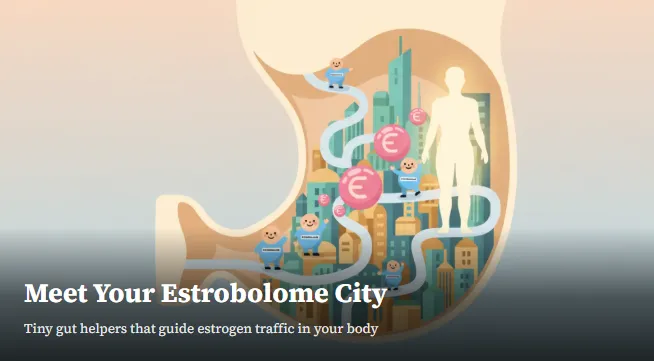
Think of your gut as a big busy city inside your belly. Inside this city live many tiny workers called bacteria. Some of these workers form a special team called the estrobolome. This team has an important job: it helps your body handle a hormone called estrogen.
Estrogen is like a gentle boss that helps with periods, mood, skin, weight, and even how your brain and bones feel. The estrobolome helps decide how much estrogen stays in your body and how much leaves as waste.
How Gut Bacteria Affect Estrogen Levels
Picture estrogen as little pink bubbles floating through your blood. When your body is done with some of these bubbles, your liver wraps them up like gift boxes and sends them down to your gut to be taken out in your bowel movement.
Gut bacteria can influence how much estrogen is eliminated versus recirculated. Too many or too few of certain bacteria may shift this balance in ways that do not feel good for your body.
Meet Beta-Glucuronidase: The “Unwrap the Gift” Enzyme
Some gut bacteria make a helper tool called an enzyme. One important enzyme is called beta-glucuronidase (“bay-ta glue-COOR-on-i-daze”). This enzyme is like a tiny pair of scissors that can cut open the gift boxes your liver made for estrogen.
When beta-glucuronidase snips open these boxes, the estrogen bubbles are free again. Then your body can reabsorb estrogen into the blood, instead of letting it leave in your poop. A little of this can be helpful. But when beta-glucuronidase activity is higher, it may increase estrogen recirculation and potentially contribute to greater estrogen exposure over time.
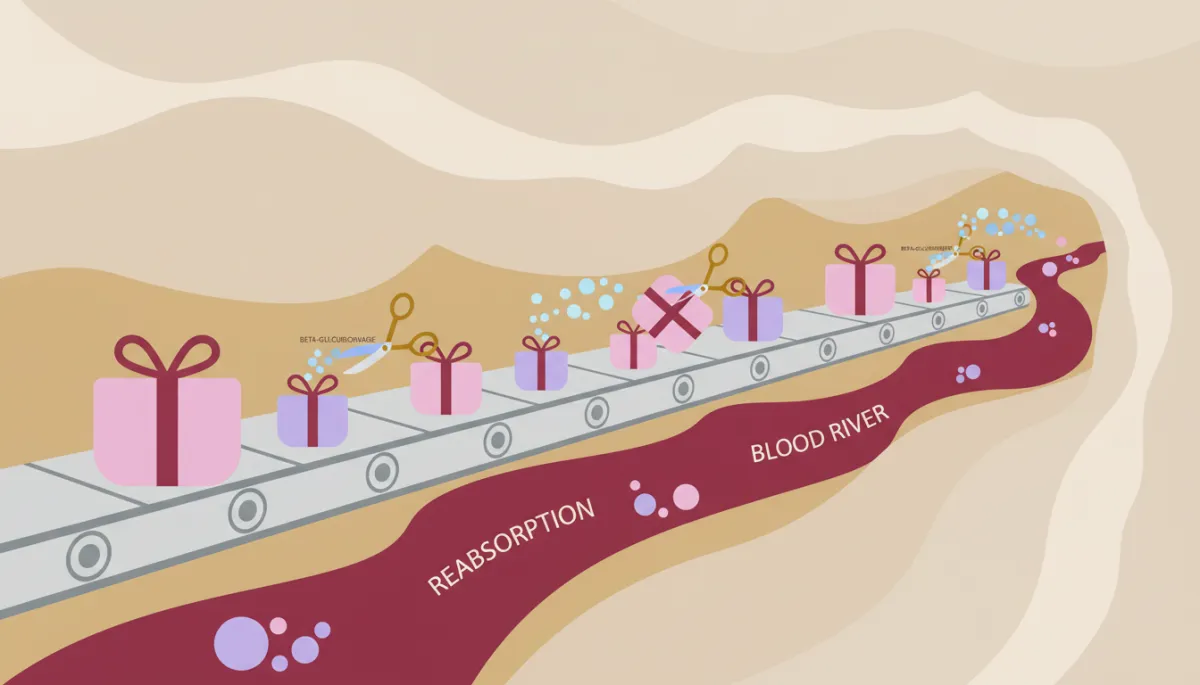
When too many boxes are opened, extra estrogen bubbles flow back into the body.
When Gut Bacteria Get Out of Balance
Now imagine your gut city again. When everything is in balance, the workers are calm, the roads are clear, and estrogen traffic moves smoothly. This is called a balanced estrobolome. But sometimes the city gets messy. Maybe there are too many of one kind of bacteria and not enough of another. This is called an imbalance in gut bacteria.
When the estrobolome is out of balance, beta-glucuronidase can be too high or too low. That can influence how much estrogen is recirculated versus eliminated. Your overall hormone picture is shaped by many factors, but your body may send you signals when this gut–hormone conversation is not feeling supportive.
💡 Friendly Reminder: Your gut and your hormones are teammates. When one is upset, the other often feels it too.
How This Can Affect Endometriosis, Fibroids, and PCOS/PMOS
Conditions like endometriosis, fibroids, and PCOS/PMOS (polycystic ovary syndrome / polyendocrine metabolic ovarian syndrome) are linked to hormone changes, but each in its own way. If your estrobolome is opening more estrogen gift boxes, you might have extra estrogen returning to circulation as one part of a much bigger hormone picture. For someone with endometriosis, researchers are exploring whether changes in estrogen metabolism and gut health might influence symptoms, but correcting the estrobolome alone is not a treatment for endometriosis.
Because fibroids are hormone-responsive, especially to estrogen and progesterone, researchers are investigating whether altered estrogen recycling through the gut may be one piece of the overall fibroid environment, alongside genetics, immune health, and other factors.
With PCOS/PMOS, insulin resistance and androgen (testosterone-like hormone) biology are usually much more central than estrogen itself. Gut health and the estrobolome may still play a supporting role in metabolism and inflammation, but they are just one part of a complex picture that also includes blood sugar balance, stress, sleep, and movement.
Breast Health, PMS, and Perimenopause
Your estrobolome can also touch breast health by influencing how estrogen is processed and cleared. Too much estrogen over time can make breast tissue feel sore, swollen, or lumpy for some people, especially when breasts are already sensitive to hormones.
Many people notice strong PMS (premenstrual syndrome) signs, like mood swings, cramps, or bloating. If estrogen goes up and down like a wild roller coaster, PMS can feel louder. Because the estrobolome is one of the systems that can influence estrogen recirculation, tending to gut health may be one supportive strategy among many (like sleep, stress care, nutrition, and movement) to help your cycle feel a bit steadier.
During perimenopause, the time before menopause, hormones naturally change. Some days there is more estrogen, some days less, and symptoms like hot flashes, mood shifts, and sleep changes can show up for many reasons. A well-supported estrobolome may help your body process and eliminate estrogen more smoothly, but it is just one part of a much larger transition that also involves your brain, ovaries, stress system, and nervous system.
Weight and Thyroid: More Ways Your Gut Talks to You
Estrogen does not work alone. It also talks to your weight and your thyroid (the little butterfly-shaped gland in your neck that helps control energy). Researchers are exploring how gut bacteria, estrogen metabolism, and metabolic health might intersect.
Bringing It All Together
So what do we do about it? You do not have to figure it all out on your own and that is where I come in. I offer genetic testing and functional lab testing to explore how your gut, hormones, and estrogen metabolism and elimination are working together in your body. With that information, we can create a personalized plan to support your estrobolome, ease symptoms, and help your whole system feel more steady over time.
📌 If You’d Like More Support, click on the Discovery Call button on my home page.
